RC Driver The Best In RC Car & Truck News, Reviews & Video



SPONSORED ARTICLE
Few Formula One cars are as recognizable or as unusual as the six-wheeled Tyrrell P34. Its clever design used four small front wheels in an effort to reduce aerodynamic drag while maintaining the grip and braking performance needed at the front of the car. More than just an engineering experiment, the P34 proved competitive on the track and remains one of the most fascinating machines in Formula One history. That makes Tamiya Tyrrell P34 Six Wheeler: Revisiting a Classic a fitting look back at one of Tamiya’s most distinctive RC releases.
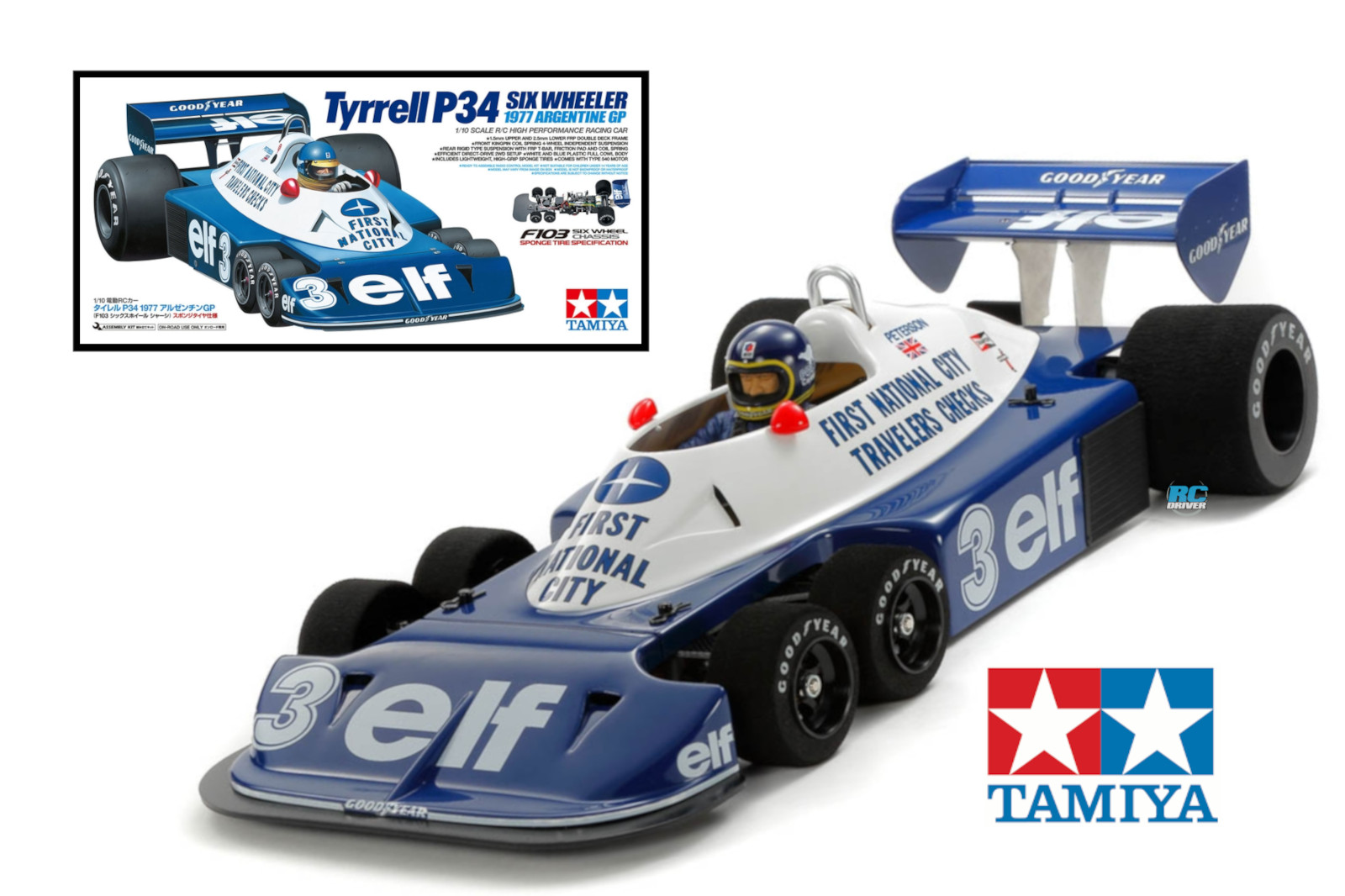
Tamiya has reproduced the Tyrrell P34 numerous times over the years, beginning with its first RC version in 1977. For this article, we are taking a look back at the most recent release, the 1/10-scale Tyrrell P34 Six Wheeler 1977 Argentine GP, #47486, released in 2022. Although it has since been discontinued, you can still find it online or even possibly tucked on a shelf at your local hobby shop, making it a worthwhile Tamiya kit to revisit for anyone who appreciates unique RC cars, Formula One history and classic Tamiyas.
THE REAL TYRRELL P34
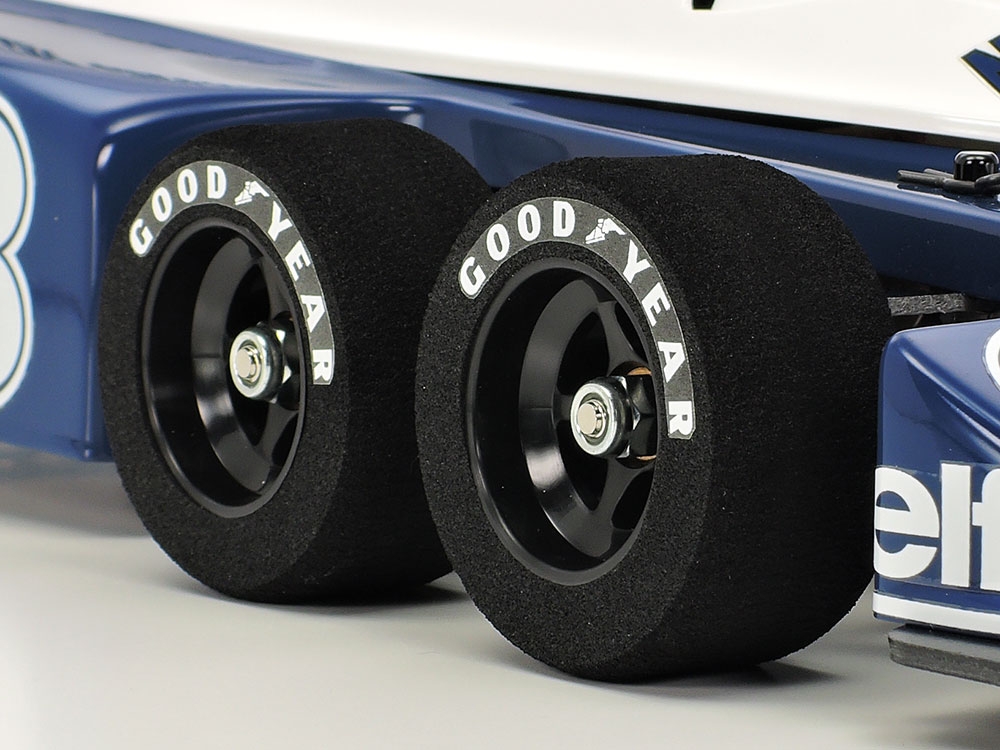
Designed by Derek Gardner, the Tyrrell P34 was created to improve front-end aerodynamics without giving up the grip and braking performance needed from the front tires. The solution was to use four small 10-inch front wheels tucked behind the front bodywork instead of two conventional-size front tires. It was an unusual approach, but it worked well enough to make the P34 genuinely competitive.
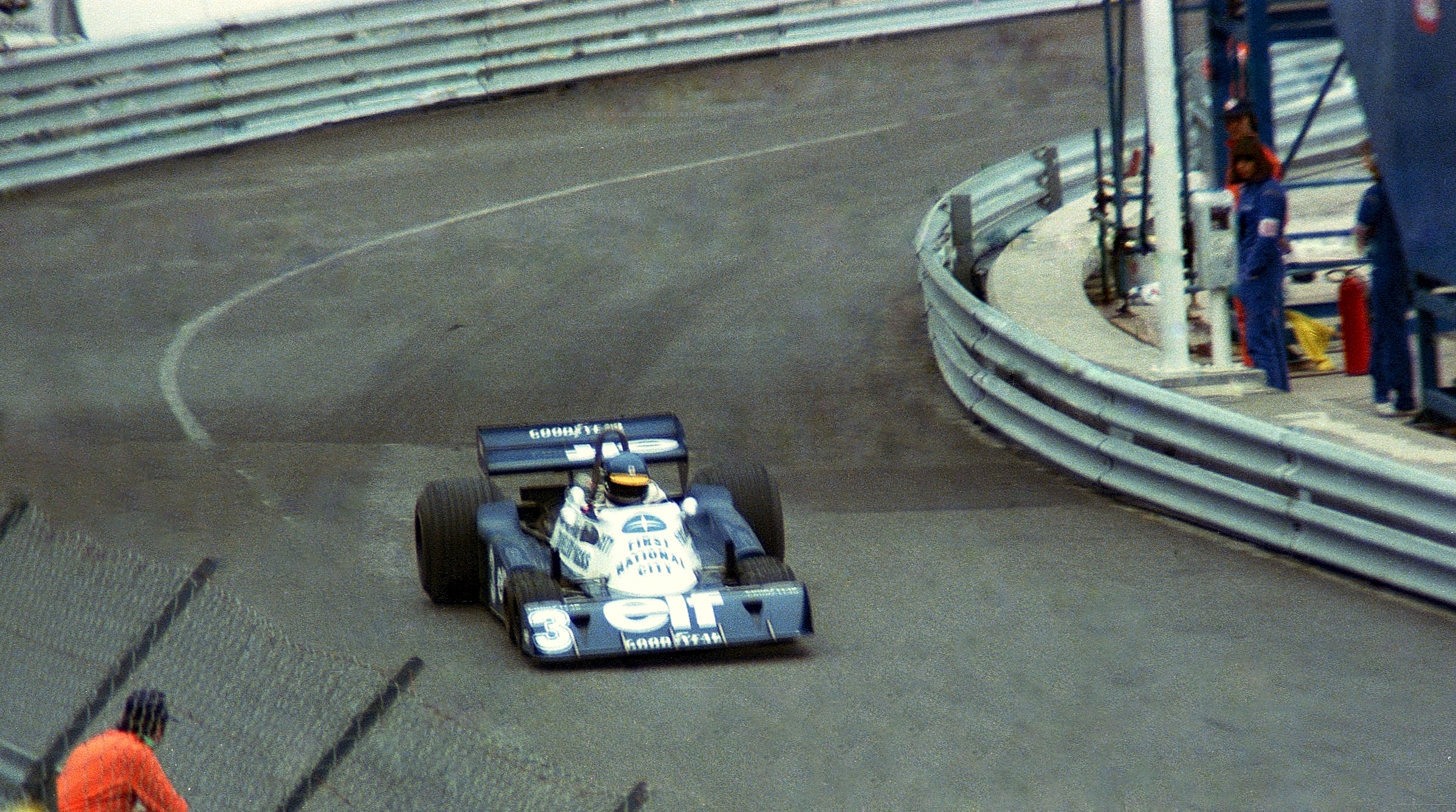
The car made its Formula One debut in 1976 and scored its biggest success at the Swedish Grand Prix, where Jody Scheckter won and teammate Patrick Depailler finished second. Tyrrell continued developing the P34 into 1977, but the concept eventually ran into problems, particularly because development of the unique small front tires did not keep pace with the conventional tires used by the rest of the F1 field. Tyrrell abandoned the six-wheel layout after the 1977 season, but the P34 remains one of the most recognizable and innovative Formula One cars ever raced.
HOW THE P34 CHANGED FOR 1977
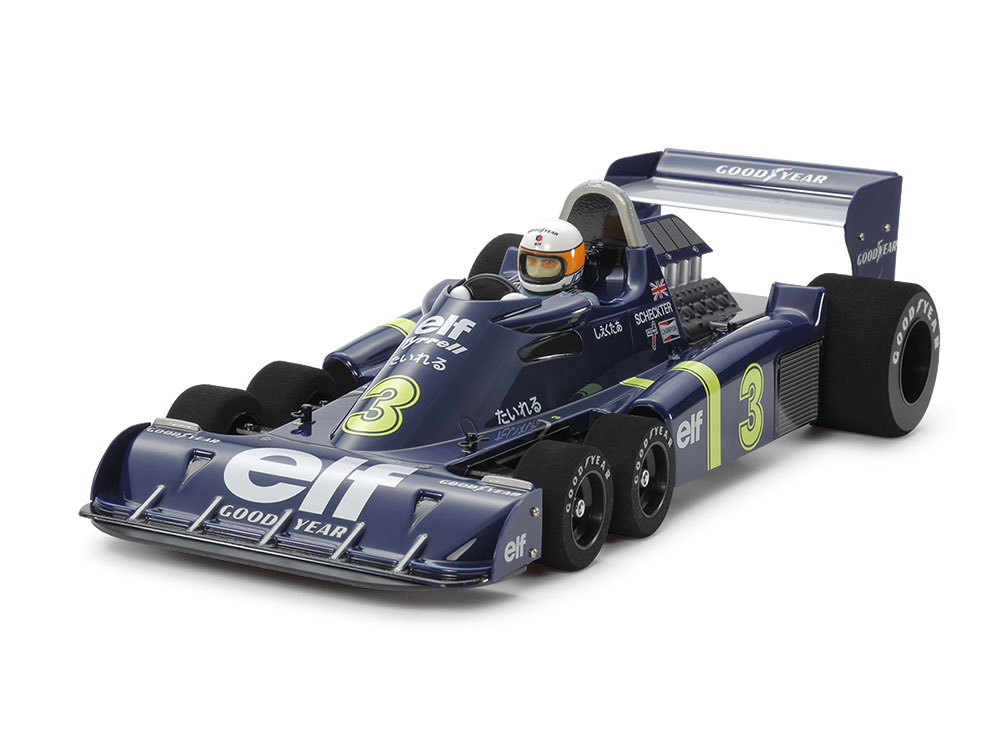
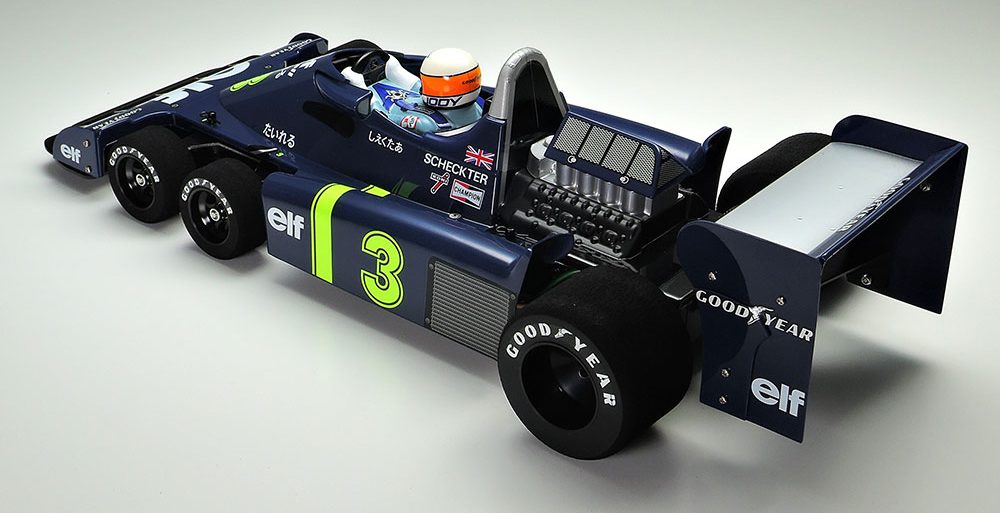
The Tyrrell P34 changed quite a bit between its 1976 and 1977 seasons, and Tamiya has recreated both versions over the years. The 1976 car had a more open cockpit area and a much more exposed rear section, giving a full view of the powerful Ford Cosworth V8 engine and creating the look most people envision when they think of the P34.
For 1977, Tyrrell revised the bodywork with a more enclosed full-cowl design that was intended to improve aerodynamics. The livery also changed, with the familiar dark-blue body joined by white sections and First National City Bank sponsorship. The Tamiya Tyrrell P34 Six Wheeler featured in this article represents this early 1977 Argentine Grand Prix configuration, which gives it a noticeably different appearance from the earlier 1976 versions.
TAMIYA AND THE TYRRELL P34
Tamiya’s history with the Tyrrell P34 goes back nearly as far as the real race car itself. The company released its first RC version of the P34 in 1977 as item #58003, which replicated the 1977 version of the full-size P34. This release was the third RC kit offered by Tamiya. Over the years, Tamiya returned to the P34 several times with updated versions that combined the unmistakable six-wheel layout with newer chassis designs and different race-specific body configurations that recreated the 1:1 F1 car.
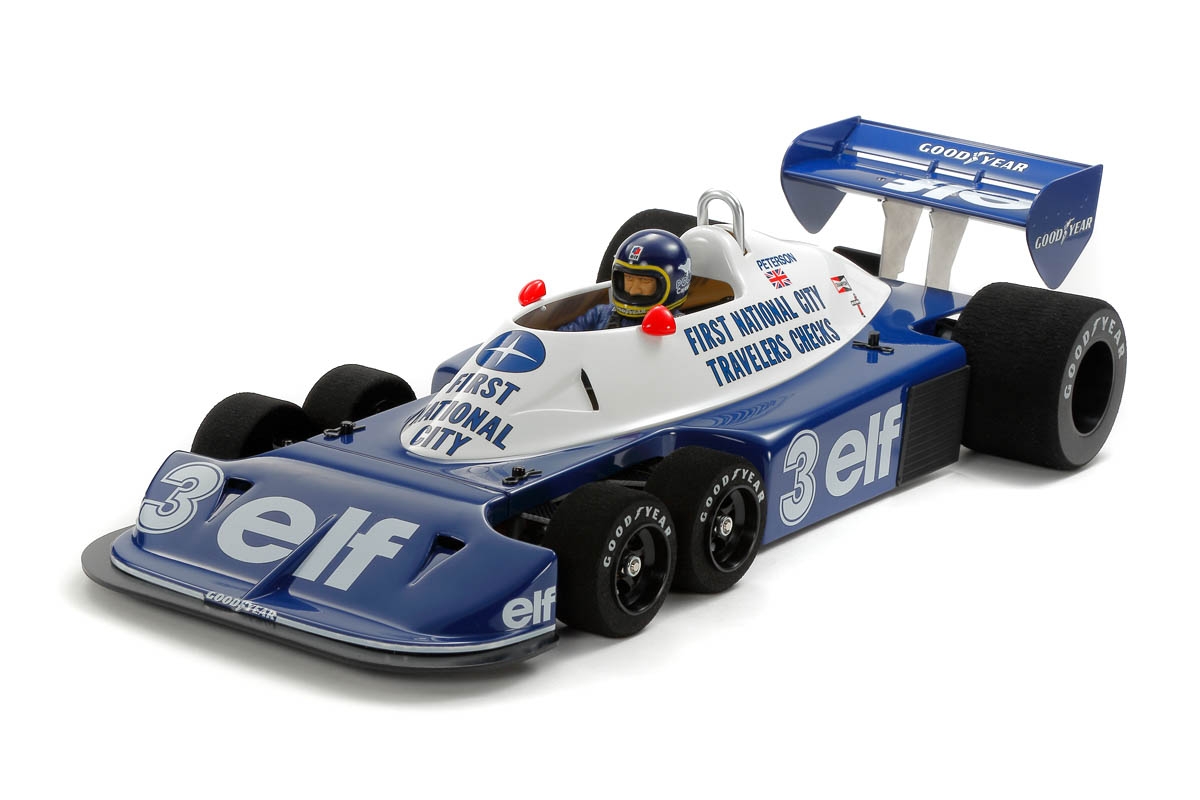
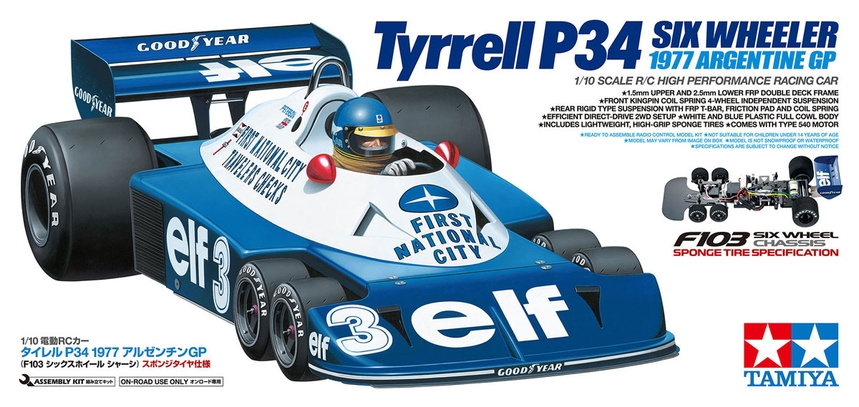
The version featured here, item #47486, was released in 2022 and is the most recent RC version of the P34 offered by Tamiya. It combines the Tamiya F103 Six Wheel chassis with Tamiya’s detailed recreation of the 1977 Argentine Grand Prix car.
F103 SIX WHEEL CHASSIS
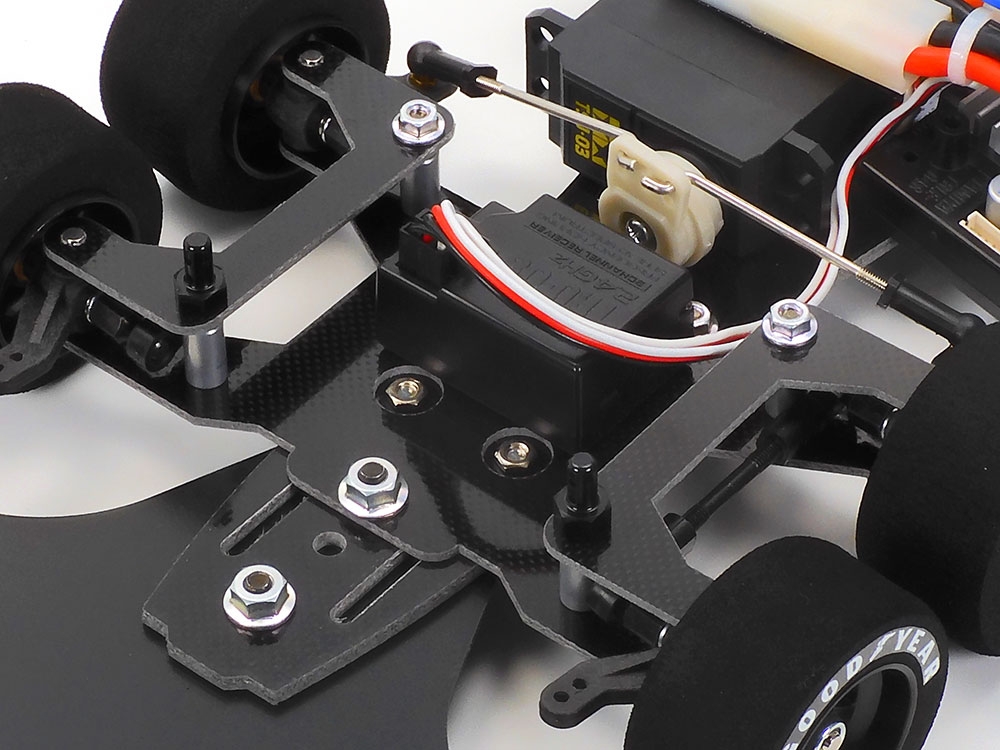
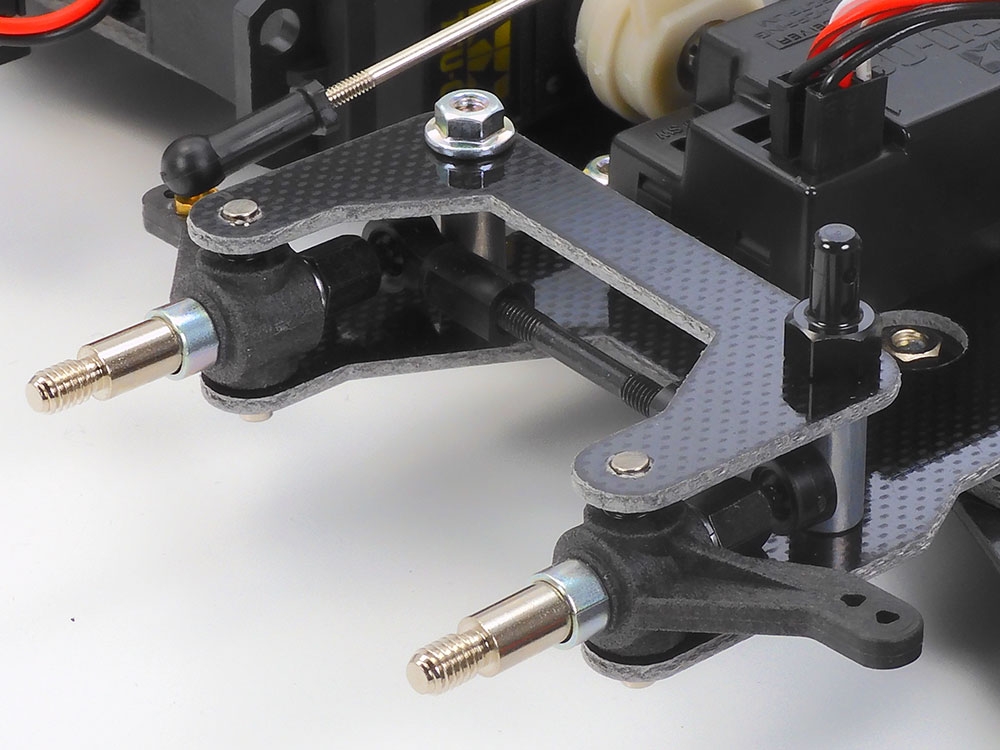
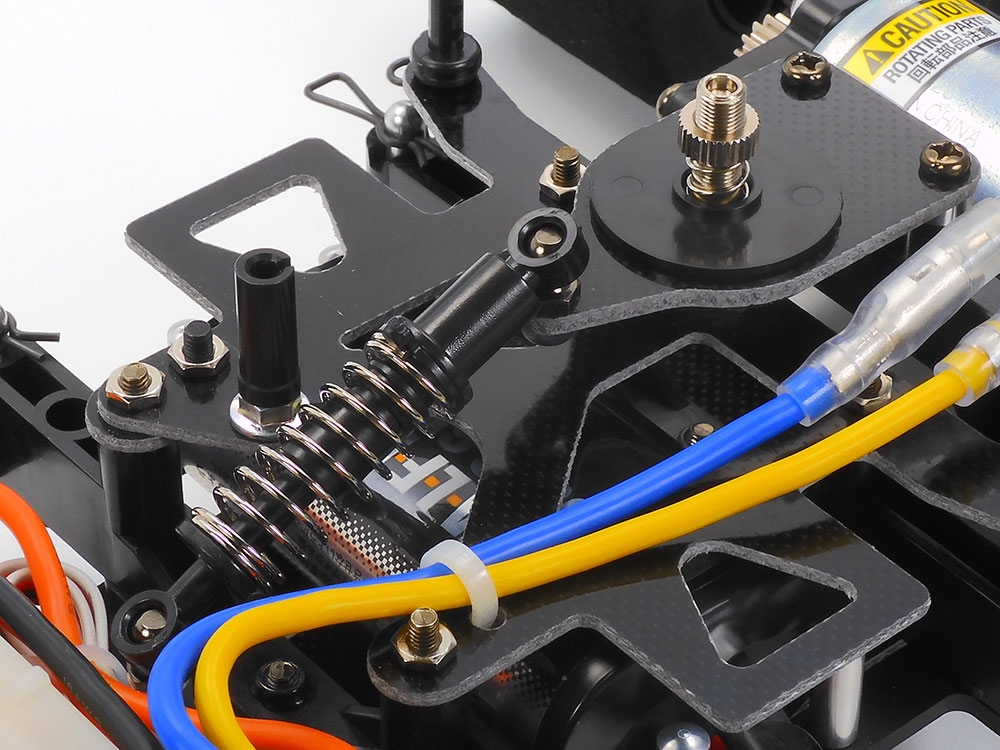
Underneath the body, the Tyrrell P34 uses Tamiya’s F103 Six Wheel chassis, which adapts the simple direct-drive Formula One layout to the car’s unusual six-wheel configuration. The chassis uses an FRP (fiber reinforced plastic) half double-deck design with four independently sprung front wheels, all steered by a single servo. At the rear is a rigid T-bar suspension setup with a friction damper and low-friction pads.
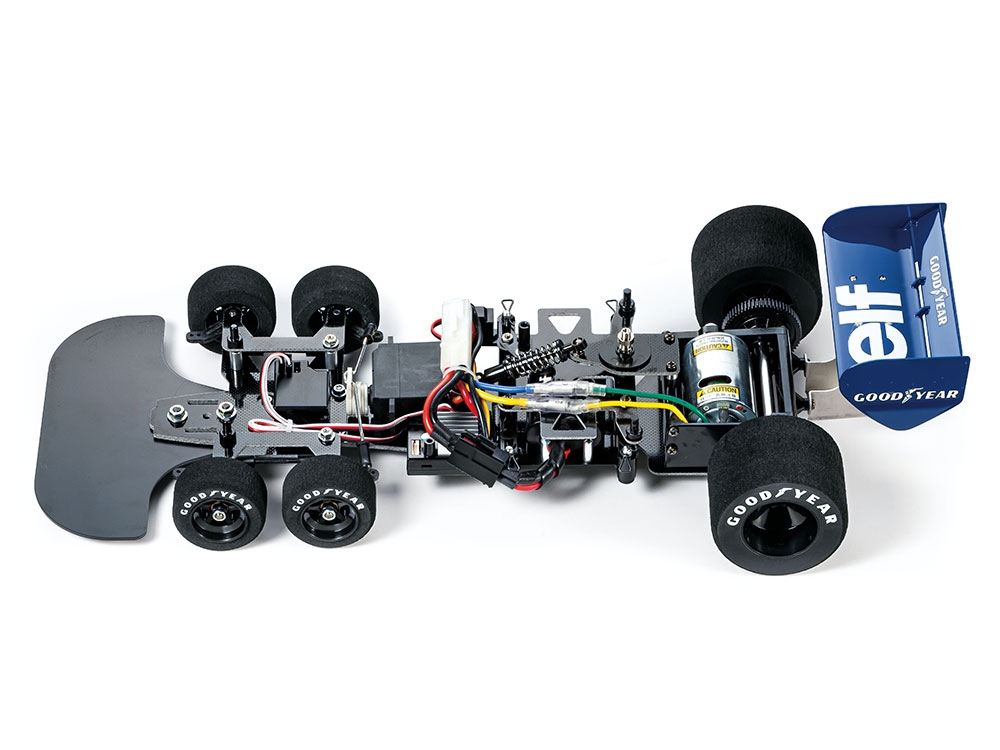
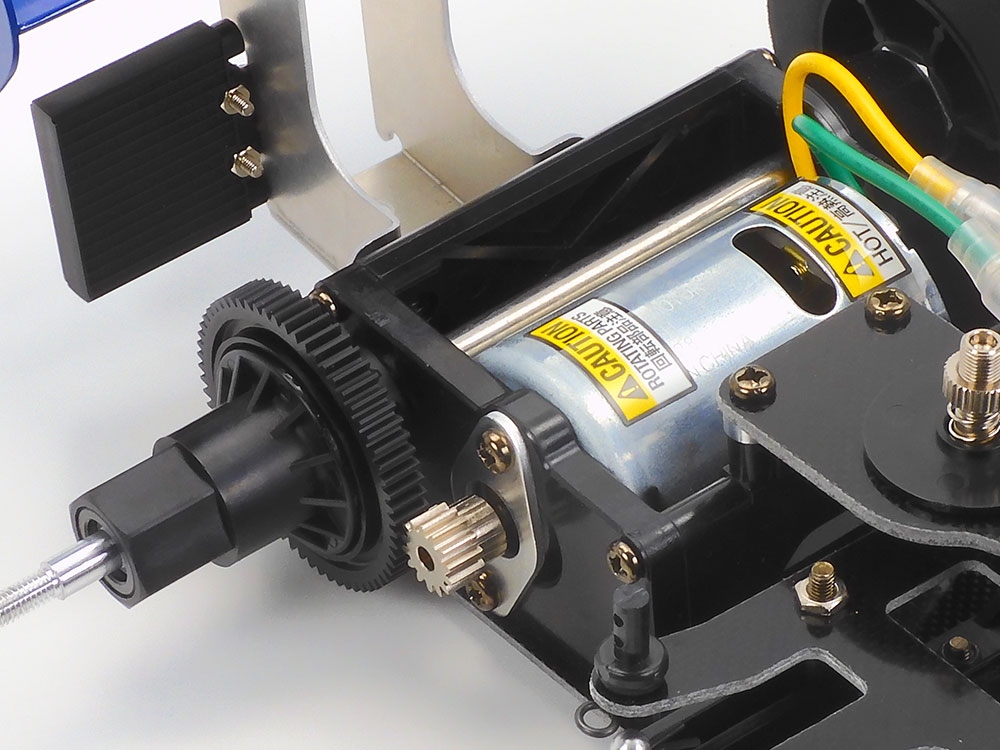
Power comes from the included Tamiya RS-540SH brushed motor and is sent directly to the rear axle through a ball differential. The stock 14-tooth pinion and 63-tooth spur gear provide a 4.5:1 gear ratio. The simple rear-drive layout keeps the drivetrain uncomplicated, which is quite a contrast to the much more unusual suspension and steering arrangement at the front.
BODY AND SCALE DETAILS
One of the highlights of the Tamiya Tyrrell P34 Six Wheeler 1977 Argentine GP kit is its highly detailed ABS plastic body, which recreates the full-cowl Tyrrell P34 used at the season-opening 1977 Argentine Grand Prix. The upper cowl is molded in white while the side pontoons are molded in blue, so you can simply apply the included markings and run the body in its molded colors. For a more finished, scale-model appearance, builders can paint the body before adding the decals, which gives the surfaces a noticeably different look than the bare molded plastic.
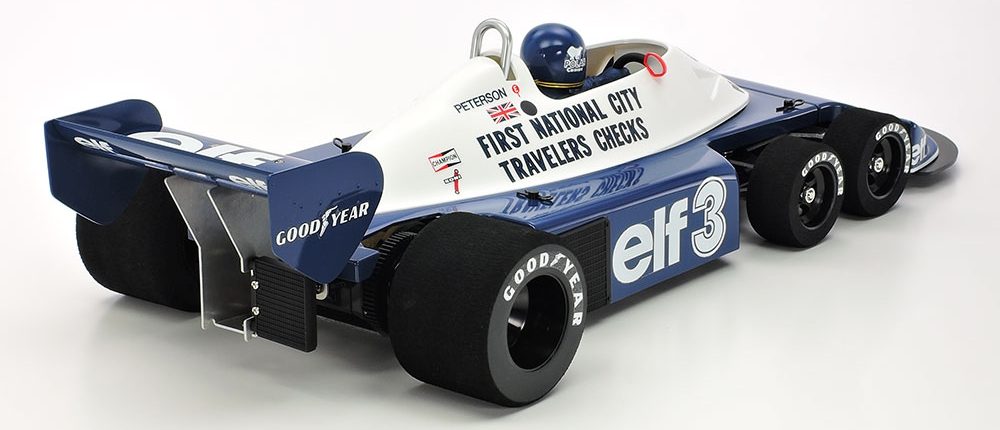
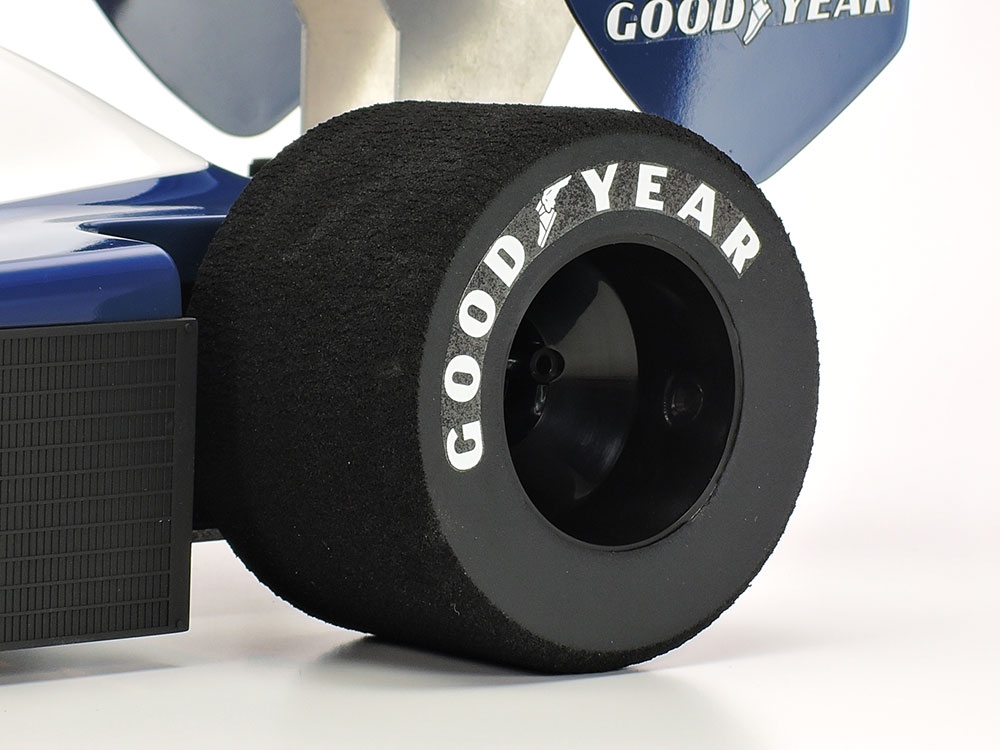
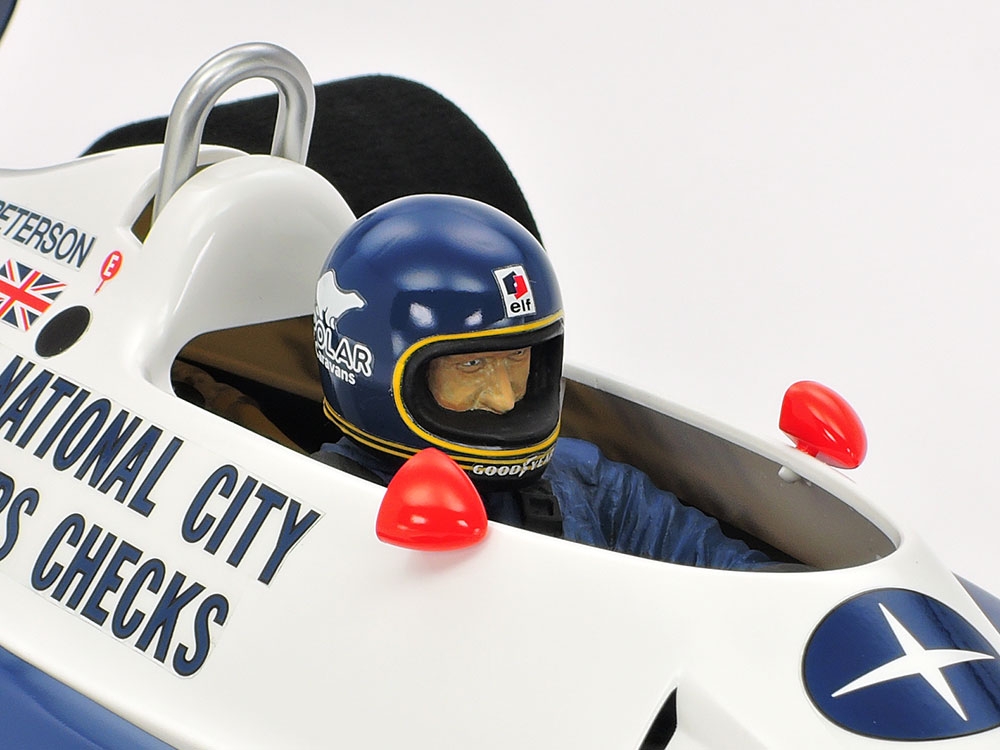
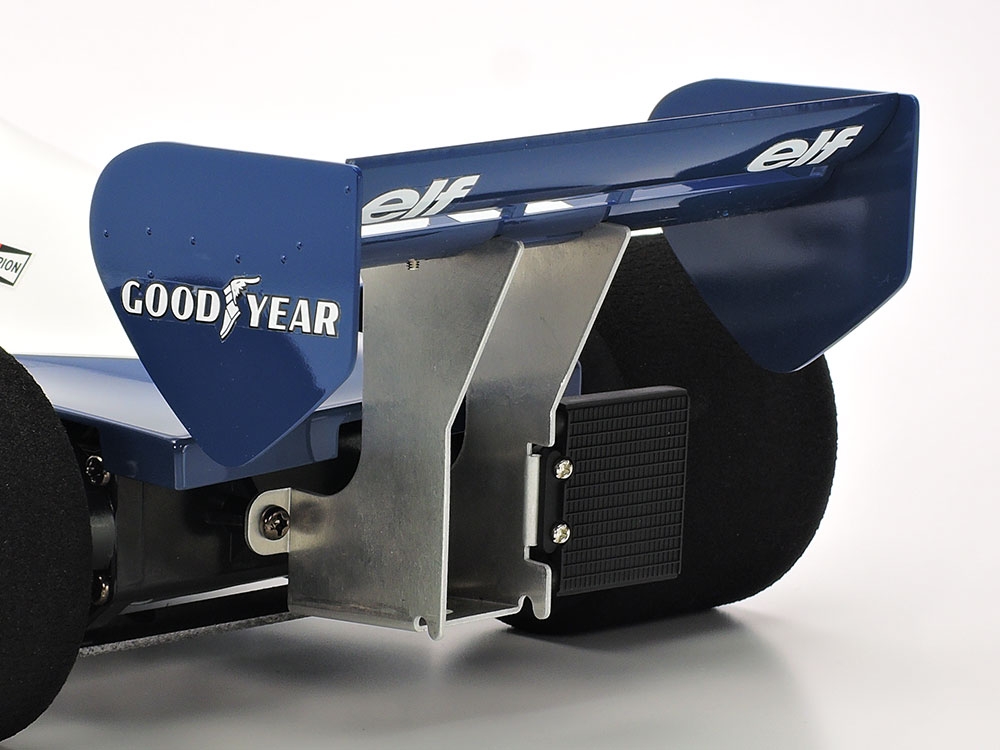
Tamiya includes markings for both Ronnie Peterson’s #3 car and Patrick Depailler’s #4 car, along with Goodyear logos for the sponge tires. There are also plenty of small details that help bring the model to life, including the driver figure and helmet, rear wing and oil cooler mounted on metal stays. Even the driver helmet markings are supplied for both Peterson and Depailler. Combined with the unusual six-wheel layout and full-cowl bodywork, these details give the finished car the distinctive look of the early 1977 P34.
TAMIYA TYRRELL P34 SIX WHEELER SPECS
Item: #47486
Scale: 1/10
Chassis Type: F103 Six Wheel
Construction Type: Assembly kit
Length: 17.13 in. (435mm)
Width: 7.87 in. (200mm)
Height: 4.25 in. (108mm)
Weight: 1.76 lb. (800g), w/out RC equipment or battery
Front Tread: 5.51 in. (140mm)
Rear Tread: 6.10 in. (155mm)
Front Tire Width/Diameter: 0.91 in./1.73 in. (23mm/44mm)
Rear Tire Width/Diameter: 1.77 in./2.52 in. (45mm/64mm)
Chassis: FRP (fiber reinforced plastic) half double deck
Drivetrain: Rear 2WD
Differential: Ball differential
Transmission: Direct drive with transverse motor
Gear Ratio: 4.5:1 (using stock 14T pinion/63T spur gear)
Bearings: Ball bearings, metal & plastic bushings
Suspension (F/R): Independent/Rigid T-bar
Shocks (F/R): Kingpin coil springs/Mono friction shock with low-friction pads
Motor: RS-540SH brushed
Speed Control: Sold separately
Body: ABS plastic, upper cowl molded in white, side pontoons molded in blue
Wheels: Single-piece plastic
Tires: Lightweight sponge tires
REQUIRED TO COMPLETE
- 2-channel radio system
- Electronic speed control
- Steering servo
- Battery pack
- Battery charger
- Paint for ABS plastic (optional)
READY-TO-RUN VERSION
Tamiya also offered a ready-to-run version of the Tyrrell P34 under item #57738. Released in 2005 as part of Tamiya’s XB (Expert Built) series, it came factory assembled with the body finished, a 540 motor and radio equipment already installed, giving hobbyists a much quicker way to get a six-wheel P34 on the track. To complete the ready-to-run version, you would need to supply a battery pack and charger.
WRAP UP
 The Tamiya Tyrrell P34 Six Wheeler 1977 Argentine GP is a great example of how Tamiya can take an important piece of motorsports history and turn it into an RC kit that is just as interesting to build and display as it is to drive. Between the F103 Six Wheel chassis, detailed hard body and unmistakable six-wheel layout, there is plenty here for both RC enthusiasts and Formula One fans to appreciate. It may no longer be part of Tamiya’s current lineup, but it remains one of those kits that is well worth keeping an eye out for.
For more information about Tamiya products, visit: TAMIYA
SPONSORED ARTICLE